
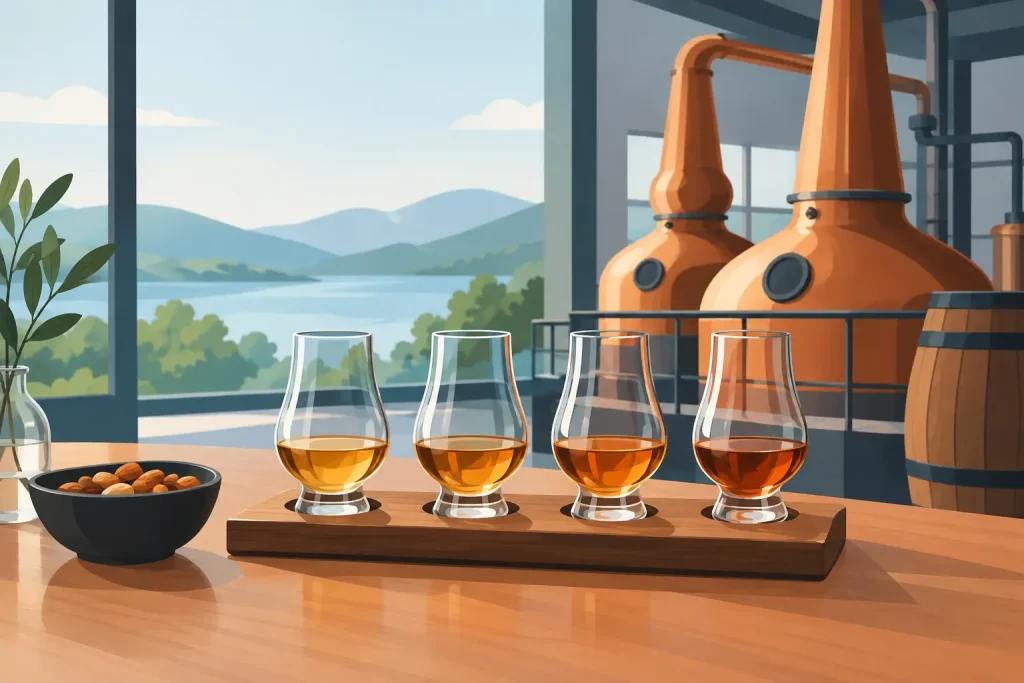
A great distillery visit is not about proving you can identify every spice in a rye or recite the history of bourbon. This distillery tasting guide is about getting more enjoyment out of every pour, whether you are planning a relaxed date, a birthday outing, or a full day with your favorite people.
Spirits can feel more intimidating than beer or wine because the flavors are concentrated and the pours are stronger. But a tasting room is built for curiosity. Take your time, trust what you taste, and let the people making the spirits show you what makes their bottle worth talking about.
Start With the Spirit, Not the Rules
There is no single “right” way to taste whiskey, rum, gin, vodka, or brandy. The goal is to notice what you enjoy and understand how the distiller got it there. A gin lover may pay attention to juniper, citrus peel, herbs, and floral notes. A whiskey fan might notice grain, oak, caramel, pepper, smoke, or fruit. With rum, look for the influence of molasses, sugarcane, aging barrels, and regional style.
Before your first sip, give the glass a gentle swirl and take a quick smell. Keep it easy. You do not need to bury your nose in the glass, especially with a high-proof spirit. A light sniff from a few inches away can reveal plenty without the alcohol taking over.
Then take a small sip and let it sit on your tongue for a moment. Notice the first flavor, the texture, and what lingers after you swallow. Does it feel bright and crisp? Rich and warming? Sweet, dry, peppery, or smooth? Those simple observations are more useful than forcing yourself to find a tasting note that does not feel true.
A Distillery Tasting Guide for Pacing Yourself
A tasting pour may look small, but the alcohol adds up faster than many guests expect. The best distillery days are paced well enough that everyone remembers the stories, enjoys the meal, and gets home safely.
Eat before you go, and make food part of the plan if you will be visiting more than one stop. A sandwich, a proper brunch, or shared plates between tastings can make a major difference. Water matters just as much. Have some before your first sample and keep returning to it throughout the day.
You also do not need to finish every pour. Tasting rooms want you to experience their spirits, not rush through them. If one sample is not for you, it is perfectly fine to set it aside. Save your attention for the pours that surprise you.
Pacing is especially important when cocktails are part of the visit. A small neat pour and a full cocktail are not the same experience. If you are sampling several spirits, consider splitting a cocktail with a friend or choosing one signature drink at the stop that excites you most.
Know What You Are Tasting
The best distilleries give you more than a lineup of glasses. They give you a story about ingredients, fermentation, distillation, barrels, and the people behind the still. A few thoughtful questions can turn a good tasting into the highlight of your day.
Ask what base ingredient the spirit starts with. Whiskey may begin with corn, rye, wheat, barley, or a blend of grains. Gin and vodka can start from grain, potatoes, grapes, or other fermentable materials. Rum begins with sugarcane products, but its final flavor can vary dramatically depending on fermentation, distillation, and aging.
It is also worth asking whether the spirit is aged and what kind of barrels were used. New charred oak, used bourbon barrels, wine barrels, and specialty finishing casks can all leave a clear imprint. Barrel aging often brings notes like vanilla, toast, baking spice, dried fruit, or caramel, but the grain or sugarcane character should still have a chance to speak.
For gin, ask which botanicals lead the recipe. For whiskey, ask about the mash bill and age statement. For any spirit, ask how the distiller prefers you to drink it. Their answer may lead you to a simple highball, an old fashioned, a citrus-forward cocktail, or a neat pour with a few drops of water.
Use Water as a Tool, Not a Test
Adding a few drops of water to a higher-proof whiskey can soften the alcohol and open up different aromas. It is not cheating, and it does not mean you are doing the tasting wrong. Water changes how flavor compounds present themselves, which is why a pour can seem fruitier, sweeter, or more aromatic after a small splash.
That said, it depends on the spirit and your preference. A delicate vodka or a bright gin may not need water at all. If you are unsure, taste the spirit as poured first, then add water gradually. You can always add more, but you cannot take it back out.
Ice has its place too, particularly when you are relaxing with a cocktail. Just know that chilling can mute aromas at first, while dilution develops as the ice melts. There is no prize for drinking spirits neat. Drink them in the format that makes you want another thoughtful sip, not another rushed one.
Do Not Let “Smooth” Be the Only Goal
Guests often describe a spirit as smooth when it feels easy to drink, but smoothness is only one piece of the picture. A spirit with a little heat can still be beautifully made, particularly if it has a higher proof or a bold flavor profile. Likewise, a very soft spirit may be perfect for a refreshing cocktail but less exciting when sipped neat.
Instead of asking whether something is smooth, try asking what you like about it. Maybe it is creamy, clean, citrusy, nutty, spicy, or oak-forward. Maybe you enjoy how the flavor changes from the first sip to the finish. Those details help a tasting room team recommend another pour that actually fits your palate.
Make a Group Tasting More Fun
A distillery outing gets better when everyone shares the discoveries. If your group orders different flights or cocktails, take a few moments to compare. One person may find a botanical gin that is ideal for a crisp summer drink, while another discovers a barrel-aged rum that belongs in an after-dinner cocktail.
Keep the conversation light, especially if there are beginners in the group. No one needs to have a polished vocabulary to have a good palate. “This tastes like a campfire marshmallow” or “I get orange peel” can be the start of a great discussion. The point is to sip, savor, and connect, not turn the day into an exam.
For bachelor and bachelorette parties, birthdays, and corporate outings, the logistics matter as much as the pours. Reservations, timing, food stops, and safe transportation can quickly become a group-chat headache. A hosted experience through Sip Happens Tours keeps the focus on the fun, with curated stops and a plan that lets everyone enjoy the day without appointing a designated driver.
Buy Bottles With a Plan
A bottle from a favorite distillery makes a great souvenir, but do not buy one simply because you liked a tiny sample in a lively tasting room. Think about how you will use it at home. Would you pour it neat after dinner, mix it into a classic cocktail, bring it to a friend’s house, or save it for a celebration?
Ask the staff for a serving suggestion before you purchase. A versatile bottle can be a smart choice if you are building a home bar, while a limited release may be worth it if you want something distinctively tied to the visit. If you are unsure, take a photo of the bottle or write down the name and revisit the decision after you have had water and food.
Leave Room for the Unexpected
The spirit you expect to love may not be your favorite, and that is part of the fun. A dedicated whiskey drinker may be surprised by a peppery gin. Someone who usually orders vodka sodas may find a local rum they cannot stop thinking about. Tasting is less about confirming your usual order and more about giving your palate a few new options.
Arrive curious, eat well, keep water close, and ask the people behind the bar what they are most proud to pour. The best bottle of the day might be the one you never planned to try.