
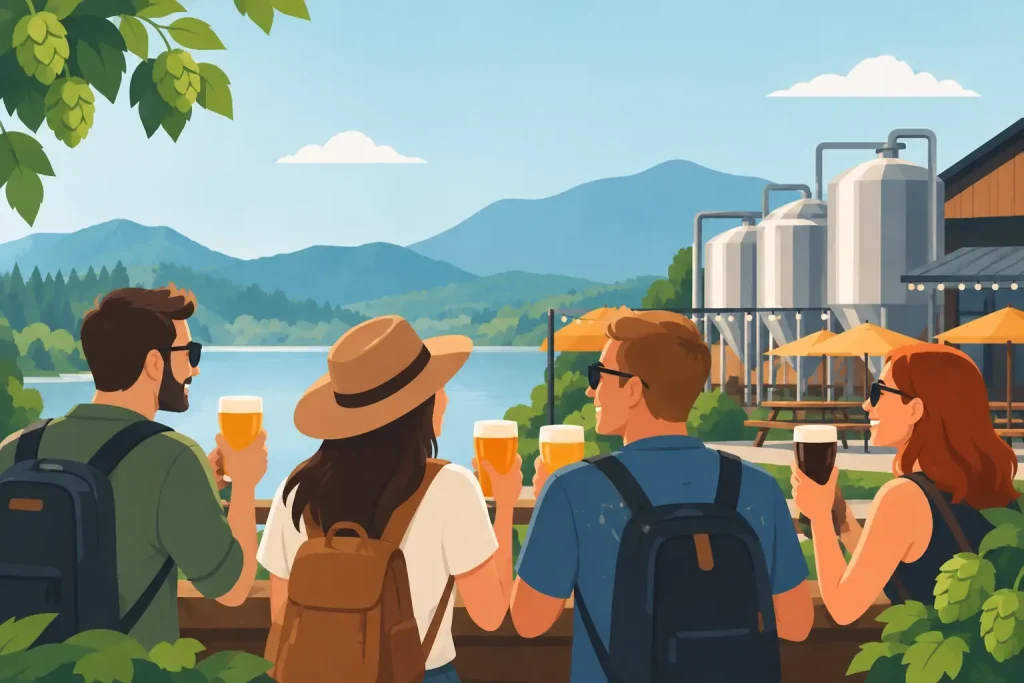
A great brewery day rarely falls apart because the beer was bad. It falls apart when one person is stuck mapping the next stop, a reservation gets missed, lunch becomes an afterthought, or the group realizes nobody should be driving. Beer tourism solves the part that can make a fun idea feel like work: it turns a few drinks into a well-paced local experience.
For visitors and locals alike, the best craft beverage outings are about more than collecting flight photos. They are a chance to meet the people behind the pours, try a style you would not normally order, and spend unhurried time with your favorite people somewhere that feels distinctly New England. When the details are handled well, the day feels easy. That is not an accident. It is good hospitality.
What Beer Tourism Is Really About
Beer tourism is travel with a local tap list. Sometimes that means planning a weekend around a destination brewery. Sometimes it means taking a Saturday to visit a few neighborhood spots you have passed a dozen times but never entered. The common thread is intentionality: you are going somewhere to understand its beer scene, not just to find the nearest pint.
That distinction matters in a region with so much character packed into a relatively small map. Boston brings historic neighborhoods and a busy urban energy. Providence has an independent streak and a creative food culture that pairs naturally with a brewery stop. Newport adds coastal views and a getaway feel, while the South Coast offers its own mix of hometown breweries, farms, and hidden gems. Each area can support a completely different kind of outing.
The beer itself is part of the story, but not all of it. A crisp lager can make more sense after a sunny waterfront walk than it does in a tasting room on its own. A rich stout might land differently after hearing how a brewer sources ingredients or why a recipe changed. Good beer tourism gives guests context, conversation, and a reason to remember what was in the glass.
Why a Curated Brewery Day Beats Bar Hopping
Bar hopping has its place. It is spontaneous, familiar, and often exactly what a casual Friday night calls for. But it can also mean long waits, uneven food options, and a lot of time spent deciding what happens next. A brewery-focused day gives the group a shared plan without making the experience feel rigid.
The biggest advantage is pacing. A smart itinerary leaves room to taste, talk, eat, and move between venues without rushing. It also accounts for a simple reality: craft beer can be stronger than it tastes. A lineup of hazy IPAs, barrel-aged releases, and generous pours can catch up with a group quickly. Transportation and a host are not buzzkills. They are what let everyone relax and enjoy the day responsibly.
There is also a quality difference between arriving cold at a popular venue and walking in with a plan. Reserved seating, pre-arranged tastings, and venue relationships can save a group from the classic weekend disappointment: the place you were excited about is full, the kitchen has a long wait, and half the group wants to leave before anyone has tried a beer.
That is why guided experiences work especially well for birthdays, bachelor and bachelorette parties, visiting friends, and team outings. Nobody has to become the planner, the driver, or the person chasing down payments. Everyone gets to participate.
How to Plan Beer Tourism That Feels Fun, Not Overplanned
The sweet spot is structure with breathing room. Start by deciding what kind of day your group wants, rather than simply listing breweries. Are you looking for a lively celebration, a relaxed afternoon with food, a behind-the-scenes experience, or a mix of beer and other craft beverages? Your answer shapes the route, timing, and venue choices.
Choose a region, then choose a rhythm
Trying to cover Boston, Providence, and Newport in one day is not ambitious. It is mostly time in transit. Pick one area and let the experience unfold there. For a first-time visitor, a city route can offer variety and easy energy. For a group celebrating a milestone, a coastal or countryside route may feel more like an occasion.
Then think about rhythm. Two or three quality stops with a meal built in usually create a stronger day than trying to squeeze in five. You want enough time to settle into each venue, ask questions, browse the menu, and enjoy the company you came with. The goal is not to prove endurance. It is to have stories worth retelling.
Build food into the plan early
Food should not be the emergency decision made after the third tasting. Eating early and consistently helps guests enjoy the flavors, keeps the energy steady, and supports a safer day. Depending on the route, that might mean a full lunch, brewery snacks paired with tasting flights, or a dedicated restaurant stop between venues.
Food also makes the outing more inclusive. Not everyone in the group will love every beer style, and some guests may drink lightly or skip alcohol entirely. Great hosts make room for that. A thoughtful route can include nonalcoholic options, cider, wine, spirits, or simply a venue with a menu that gives every guest something to enjoy.
Leave room for discovery
A planned itinerary should not feel like a stopwatch. Some of the best moments happen when a brewer comes over to talk about a new release, someone finds their surprise favorite, or the group gets pulled into a trivia question that becomes an inside joke for the rest of the day.
This is where local knowledge earns its keep. The best stop on paper is not always the best stop for your group on a particular Saturday. Hours change, private events take over rooms, seasonal releases come and go, and a venue’s mood can vary. A flexible plan backed by people who know the scene is better than a rigid spreadsheet.
Beer Tourism Is Better When Everyone Can Participate
The old version of a beer outing often centered on who knew the most about hops. That is changing, and for the better. The most memorable craft beverage experiences welcome curious first-timers alongside serious enthusiasts.
If you already know your pilsners from your pale ales, ask about the brewery’s process, seasonal ingredients, or what the team is excited to make next. If you are newer to craft beer, start with what you generally enjoy. Do you prefer crisp, citrusy, dark, tart, or less bitter flavors? That is plenty of information to begin with. There is no test at the door.
Groups should also avoid treating tasting notes like a verdict. One person may love a funky sour while another reaches for a clean lager. Both are right. The fun is in comparing reactions, trying a small sample before committing to a full pour, and finding the beer that surprises you.
The Convenience Factor Is the Point
There is a reason organized beer tourism keeps growing as an idea for weekends and celebrations. People are busy. They want memorable local experiences, but they do not necessarily want to spend their Thursday night researching routes, messaging venues, booking rides, and wondering whether the schedule makes sense.
A well-run guided outing packages the invisible work: transportation, timing, venue access, samples, food coordination, and an on-tour host who can keep the day moving without killing the mood. Sip Happens Tours brings that kind of curated, VIP-minded experience to groups across Boston, Providence, Newport, and the South Coast, with public and private options built around how people actually like to celebrate.
That convenience is not about removing spontaneity. It is about removing friction. You can still laugh too loudly, discover a new favorite beer, take the group photo, and linger over a conversation. You just do not have to worry about who is navigating to the next stop.
Make the Day Worth Remembering
Beer tourism works best when it respects both the craft and the people sharing the day. Choose venues with personality, make space for food and non-beer drinkers, keep transportation safe, and resist the urge to turn every stop into a race. A little planning creates more room for the moments that cannot be scheduled.
The next time your group says, “We should do something this weekend,” take that as your cue to trade the usual bar rotation for a local story, a full tasting glass, and a ride home already handled.