
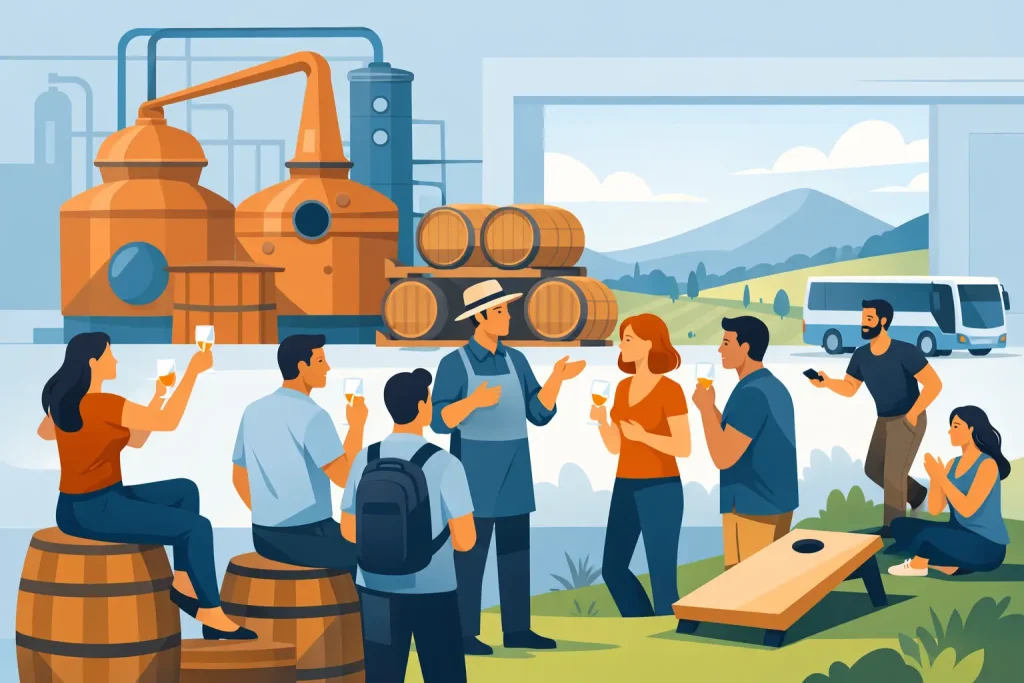
A team happy hour can disappear into the same few conversations at the same neighborhood bar. A distillery outing changes the rhythm. Your group gets a reason to move around, taste something new, meet the people behind local spirits, and connect outside of work without someone having to play event planner and designated driver.
To organize distillery team outings that feel polished rather than thrown together, treat the experience like a hosted event, not a reservation with a loose plan. The best outings balance fun with practical details: the right guest list, a comfortable pace, easy transportation, and options for every person on the team.
Start With the Outcome, Not the Drink Menu
Before choosing a distillery, decide what the outing needs to accomplish. Is this a welcome event for new hires? A sales-team celebration? A thank-you after a demanding quarter? Or a low-pressure chance for a hybrid team to spend real time together?
That answer shapes everything from the day of the week to the length of the outing. A two-hour tasting close to the office may be perfect for a midweek appreciation event. A Saturday private tour with a meal and multiple stops makes more sense for an annual celebration or team retreat.
Be honest about the group’s energy, too. A small crew of craft-spirit fans may love a detailed production tour and a guided tasting. A larger group with mixed familiarity will usually have more fun with a welcoming host, approachable pours, food, and time to talk. You do not need everyone to be a whiskey expert. In fact, the strongest team outings make discovery easy for casual guests and enthusiasts alike.
Choose a Distillery Experience That Fits Your Team
A distillery can be much more than a tasting room. Depending on the venue, guests may see the still, learn how a particular gin gets its botanical character, compare barrel-aged expressions, or hear the story of a local producer. Those details give people something to talk about beyond work.
When evaluating options, think through group size, accessibility, atmosphere, and timing. Some intimate distilleries are ideal for a group of 10 but may feel crowded with 30. Others have private rooms, patio space, or reserved seating that lets a larger team settle in comfortably. If team members are coming from Boston, Providence, Newport, or the South Coast, travel time matters as much as the destination. A beautiful stop loses some of its shine if half the day is spent coordinating carpools.
Also ask what is included. Tasting flights, guided access, taxes, gratuities, food, and reserved space can all be handled differently from one venue to the next. A low per-person price is not always the better value if it creates a stack of last-minute decisions for the organizer.
Keep the guest experience inclusive
A great distillery outing never assumes that every employee wants to drink alcohol. Make sure nonalcoholic options are available and presented as part of the experience, not an afterthought. Water, snacks, and a real meal are equally important, especially if the group is sampling spirits.
Give guests a clear invitation that explains the plan without pressure. Let them know the event is about spending time together, with beverages available for those who choose them. That simple message makes participation more comfortable for everyone.
Build a Schedule With Breathing Room
Overpacking an itinerary is one of the fastest ways to turn a fun outing into a rushed one. A distillery visit needs room for arrival, introductions, tastings, photos, bathroom breaks, and the natural conversations that happen when colleagues are off the clock.
For most corporate groups, one great distillery paired with a meal is plenty. If you want multiple stops, keep the route geographically tight and limit the day to two or three venues. The point is not to check off the most locations. It is to give your team enough time to sip, savor, and connect.
A workable private outing might begin with pickup at the office or a central meeting point, followed by a hosted tasting and behind-the-scenes distillery visit. From there, the group can head to a nearby brewery, winery, cidery, or restaurant for food and a different flavor profile. The right mix depends on your team. A spirits-focused group may prefer two distilleries, while a diverse office may enjoy a broader craft beverage itinerary.
Plan the timing around your people, not just venue availability. A Friday afternoon event can feel celebratory, but it can also collide with school pickups, traffic, and personal plans. A Thursday evening or Saturday afternoon may draw a better turnout. For remote employees visiting the region, build in a little extra flexibility around hotel pickup and drop-off.
Make Transportation Part of the Plan
Distillery team outings should be easy to enjoy without asking anyone to monitor parking, navigation, or alcohol consumption. Assigning a designated driver may sound responsible, but it also means one employee is working while everyone else relaxes.
Professional group transportation solves several problems at once. Your team arrives together, stays together, and can enjoy the experience without dividing into rideshares or figuring out who is okay to drive home. It also keeps the day on schedule, particularly when reservations are timed or you are visiting more than one venue.
For a local team, consider pickup from the office, a transit-friendly location, or a central restaurant. For a visiting group, hotel pickup can make the experience feel especially well hosted. Share the exact departure time, pickup instructions, and expected return window in advance. People are much more likely to relax when they know how the logistics work.
This is where a curated tour can earn its keep. Sip Happens Tours can coordinate transportation, venue arrangements, tasting access, food, and on-tour hosting, so the person who suggested the outing gets to be part of it instead of managing texts and receipts all afternoon.
Add Just Enough Structure to Spark Connection
Not every team wants forced icebreakers, and that is a good thing. The setting already gives people easy conversation starters: What did you taste? Which spirit surprised you? How does a barrel change the flavor? A friendly host can keep the energy moving without turning the day into a mandatory workshop.
If you want to add a team element, make it light. A short local trivia round, a tasting note card, or a vote for the group’s favorite pour can bring people together without putting anyone on the spot. Small prizes can add energy, but the real win is creating shared moments employees will mention later.
Be mindful of company culture and management dynamics. Some teams enjoy a lively, social afternoon; others will prefer a quieter educational experience with a great meal. There is no universal right level of celebration. The best choice is the one that feels authentic to your people and supports responsible enjoyment.
Handle the Details Before They Become Problems
Once you have selected a date and format, communicate early and clearly. Send a simple itinerary with the meeting location, timing, attire guidance, accessibility information, what is included, and a contact number for day-of questions. If the event includes food, collect dietary needs in advance rather than trying to solve them at the table.
It also helps to establish a sensible budget from the start. Consider the full per-person cost, including transportation, venue fees, samples, meals, taxes, gratuities, and any extras. A fully planned experience can be easier to approve and easier to attend because employees are not surprised by add-on expenses.
Finally, make the cancellation policy and headcount deadline clear. Distilleries often prepare staffing, seating, and tasting quantities around the final number. A reliable RSVP process protects the experience for everyone and keeps the organizer from chasing answers the morning of the event.
Turn a Team Outing Into a Lasting Memory
The most successful distillery outings are not about how many pours made it onto the itinerary. They are about giving colleagues a shared experience that feels more personal than another conference room lunch and more thoughtful than an open bar.
Choose a local destination with a story, give the day enough room to unfold, and remove the transportation and planning stress before it starts. When every guest can arrive comfortably, enjoy at their own pace, and get home safely, the team connection has room to happen naturally.